Encouraging Kebonduren Residents To Engage In Entrepreneurship: Turning Pineapple Peels Into Tepache Drinks To Support SDGS 3, 7, 8, And 15

Encouraging Kebonduren Residents To Engage In Entrepreneurship: Turning Pineapple Peels Into Tepache Drinks To Support SDGS 3, 7, 8, And 15

A team of lecturers and students from the Biotechnology Study Program, Faculty of Mathematics and Science Universitas Negeri Malang (UM) conducted a training session on making tepache drinks from pineapple peels in Kebonduren Village, Ponggok District, Blitar Regency. The event, held on Saturday (13/7) at the Kebonduren Village Office, was attended by empowerment and family welfare. This activity supports SDGs 3, 7, 8, and 15.

Mrs. Sukarman, the head of empowerment and family welfare, expressed that this training was highly anticipated as it provided new ideas to the empowerment and family welfare women for innovating with the abundant and easily accessible pineapples in Kebonduren Village. Up until now, pineapples in Kebonduren Village have only been consumed as fresh fruit, with the unsold ones used as livestock feed, thus ensuring sustainable land ecosystem utilization, maintaining a clean environment, and being affordable (supporting SDGs 7 and 15). Therefore, the community service team, led by Ratna Juwita, Ph.D., innovated by turning pineapple peels into tepache drinks, which are popular among all age groups and can be enjoyed at any time. “This tepache drink can maintain digestive health, making it good for daily consumption, supporting SDG 3,” she said.

The tepache drink-making training from pineapple peels also provided new entrepreneurial ideas, opening up job opportunities and boosting economic growth, especially in Kebonduren Village (supporting SDG 8). The empowerment and family welfare women of Kebonduren Village, were very enthusiastic about the training and guidance, as evidenced by the many questions posed by the training participants. Each participant received a brief tutorial on how to make tepache drinks from pineapple peels. Ratna hopes that after the training, the empowerment and fFamily welfare women can practice it at home and that it can eventually become a small business product of Kebonduren Village. “We also provided samples of our self-produced tepache on a small scale to all training participants,” she added. Ratna also hopes that this training activity can enhance the skills of empowerment and family welfare women in Kebonduren Village. “From the survey results filled out by the participants, it shows positive feedback, as they feel they have gained additional skills with new knowledge they had never known before,” she concluded.

FMIPA UM Trains Indonesian Migrant Workers in Taiwan on Brewing Tea from Local Fruits to Support SDGs

FMIPA UM Trains Indonesian Migrant Workers in Taiwan on Brewing Tea from Local Fruits to Support SDGs

The Community Service Team from Universitas Negeri Malang (UM), represented by the Biotechnology Study Program, Faculty of Mathematics and Science, has gone beyond borders by conducting training abroad. This time, the training focused on making fruit tea from local Indonesian fruits as a ready-to-drink beverage at the Indonesian Economic and Trade Office (KDEI) in Taipei, Taiwan.

The event took place directly at KDEI Taipei last Sunday (21/7) and was attended by KDEI representatives Novrizal from the field of protection of Indonesian citizens and cultural-social information, as well as Muhammad Reza Dharmawan from KDEI administration and Indonesian Migrant Workers (TKI) who are part of the Community Learning Activity Center (PKBM) of the Indonesian Student Association (PPI) Taiwan.

The event began with a welcome speech by the principal of PKBM PPI Taiwan, Ir. Ananda Insan Firdausy, ST., MT., M.Sc. Ananda stated that PKBM PPI Taiwan is an institution engaged in non-formal education through package programs, allowing migrant workers to continue their education in Taiwan. “This training aligns with the programs at PKBM PPI Taiwan related to community empowerment, which involves providing training for PKBM PPI Taiwan students, consisting of migrant workers,” he explained. This activity supports SDGs 3, 7, 8, and 15.

Fruit tea training using local Indonesian fruits was chosen because of the abundance and variety of fruits available. However, their use has been limited to fresh consumption and some are dried for chips. During the harvest season, the quantity is abundant and the price is low. Therefore, the Community Service Team from Universitas Negeri Malang, led by Ratna Juwita, Ph.D., innovated by turning them into fruit tea, a ready-to-drink beverage rich in nutrients and vitamins, especially vitamins A and C. “We hope that this fruit tea-making training will provide new ideas for migrant workers in entrepreneurship,” she said.


Green Campus 2023

 
No. Kegiatan Tautan
1 Video Safety Briefing Rev Lihat
2 Video Sosialisasi Kebersihan FMIPA Lihat
3 Surat Edaran Nomor 4.9.78/UN32.3/KL/2023 Tentang Fmipa Sebagai Kawasan Bebas Asap Rokok Lihat
4 Surat Edaran Nomor 28.8.8/UN32.3/RT/2023 Tentang Tanggung Jawab Menjaga Lingkungan Bersih, Sehat, Indah Lihat
5 Surat Edaran Nomor 24.8.19/UN32.3/RT/2023 Tentang Jumat Bersih Dan Sehat Di Lingkungan Fmipa UM  Lihat
6 Dokumentasi Jumat Bersih Lihat
No. Kegiatan Tautan
1 Surat Edaran Nomor 29.8.16/UN32.3/KL/2023 Tentang Efisiensi Penggunaan Energi Listrik Di Fakultas Mipa UM Lihat
 
No. Kegiatan Tautan
1 Surat Keputusan Dekan Fakultas Mipa Universitas Negeri Malang Nomor 2.1.96/Un32.3/Kp/2023 Tentang Pengangkatan Tim Produksi Kompos Fmipa Universitas Negeri Malang Tahun 2023 Lihat
2 Dokumentasi Pengolahan Kompos Lihat
No. Kegiatan Tautan
1 Dokumentasi Pembuatan Biopori Di Taman FMIPA Lihat
No. Kegiatan Tautan
1 Surat Edaran Nomor 18.8.41/UN32.3/RT/2023 Tentang Pengaturan Lahan Parkir FMIPA UM Lihat
 
No. Kegiatan Tautan
1 Penelitiian Mahasiswa Asing Lihat
2 Keanekaragaman Tanaman di Lingkungan FMIPA Lihat
3 Burung Pesaba di Lingkungan FMIPA Lihat
Tim Pengmas Biologi UM Latih Pembuatan Aged Garlic dari Bawang Putih Tunggal untuk Mencegah Hipertensi dan Meningkatkan Ekonomi Masyarakat

Tim Pengmas Biologi UM Latih Pembuatan Aged Garlic dari Bawang Putih Tunggal untuk Mencegah Hipertensi dan Meningkatkan Ekonomi Masyarakat

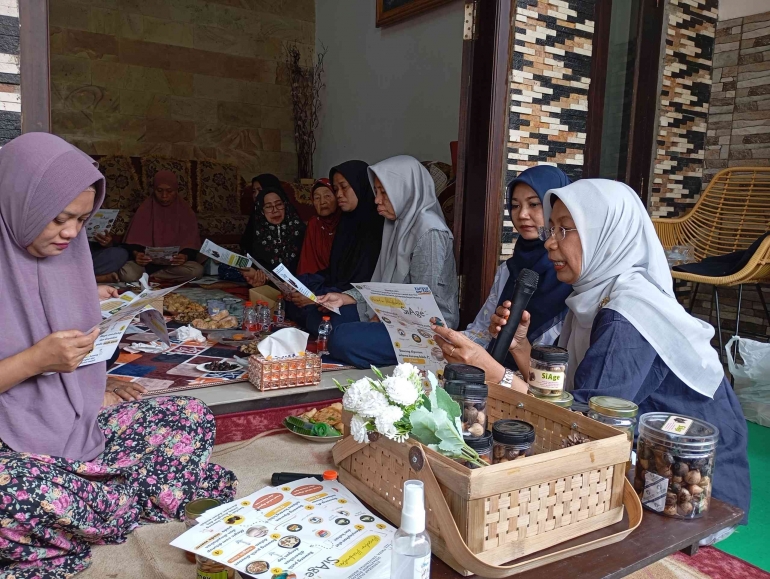
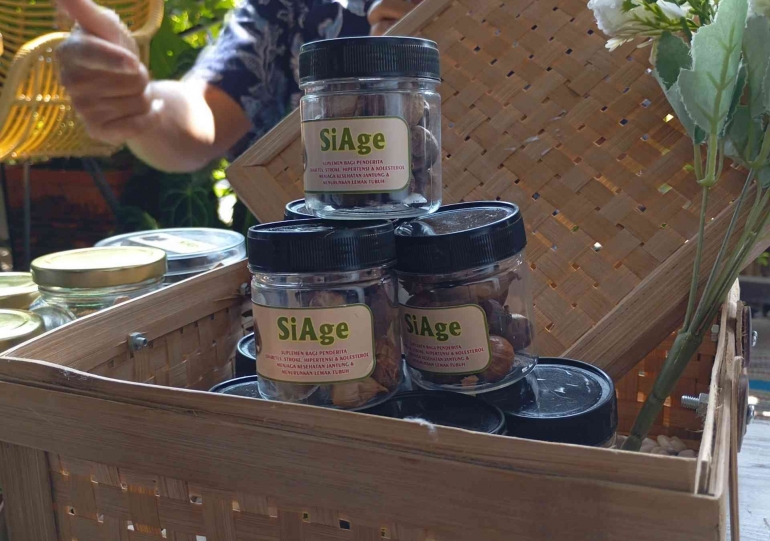
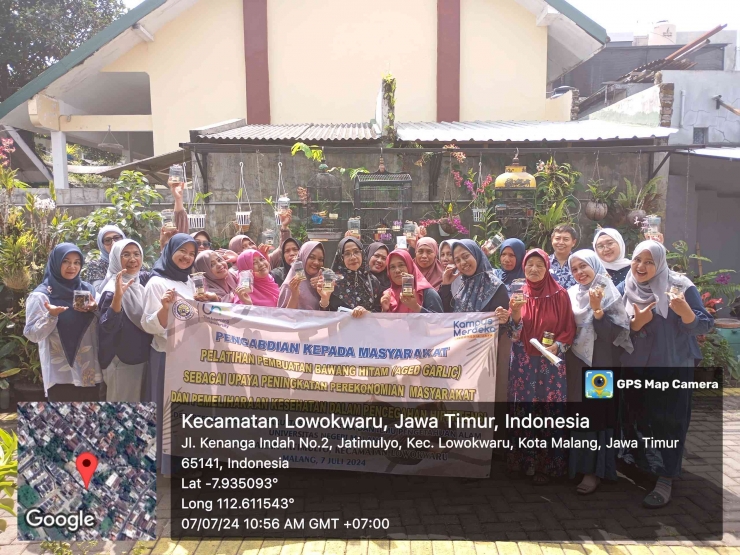
Jatimulyo, Lowokwaru, Malang — Tim pengabdian masyarakat (pengmas) Departemen Biologi FMIPA Universitas Negeri Malang (UM) yang diketuai oleh Prof. Dr. Sri Rahayu Lestari, M.Si. melaksanakan pengabdian dengan judul “Pemberdayaan Kelompok PKK RW 6 Kelurahan Jatimulyo, Kecamatan Lowokwaru Malang dengan Pelatihan Pembuatan Aged Garlic (Bawang Fermentasi) sebagai Upaya untuk Meningkatkan Kesehatan Masyarakat Melalui Pencegahan Penyakit Tekanan Darah Tinggi dan Perekonomian Masyarakat” pada Minggu (07/07/2024)

Tim pengabdian masyarakat ini melibatkan dosen, mahasiswa, dan alumni,” ungkap ketua Tim Pengmas. Pelatihan ini dirancang sebagai upaya strategis untuk meningkatkan kesehatan masyarakat dan mendorong perekonomian lokal. Ketua tim pengmas, Prof. Dr. Sri Rahayu Lestari, M.Si., memberikan presentasi ini secara langsung. Untuk membantu peserta pelatihan, selain melakukan demonstrasi pembuatan Aged Garlic, tim pengmas juga telah membuat leaflet yang berisi informasi tentang cara membuat Aged Garlic yang dikenal memiliki berbagai manfaat kesehatan, termasuk potensi dalam pencegahan tekanan darah tinggi.
Berita Selengkapnya dapat dilihat disini

Sumber : www.kompasiana.com

CO-TEACHING BIOINFORMATICS COURSE WITH ASSOC. PROF. DR. FATIMAH BINTI HASHIM FROM BIOLOGICAL SCIENCE, UNIVERSITI MALAYSIA TERENGGANU TO SUPPORT SDGs 4 AND 17

CO-TEACHING BIOINFORMATICS COURSE WITH ASSOC. PROF. DR. FATIMAH BINTI HASHIM FROM BIOLOGICAL SCIENCE, UNIVERSITI MALAYSIA TERENGGANU TO SUPPORT SDGs 4 AND 17

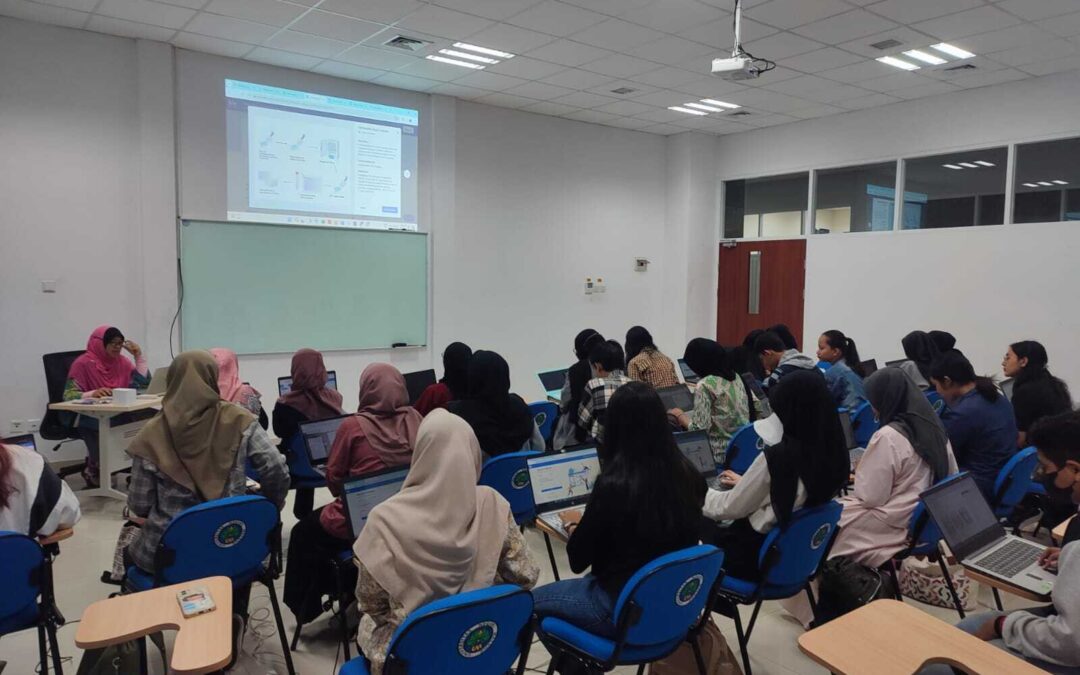
The Biotechnology Study Program of the Department of Applied Sciences, Faculty of Mathematics and Natural Sciences, State University of Malang, held a co-teaching session for the Bioinformatics course (BIOTUM6131) on June 6, 2024, with Assoc. Prof. Dr. Fatimah Binti Hashim as the guest lecturer. The event took place at Lecture Building A19, 1st floor, and was attended by biotechnology program students and those interested in bioinformatics.
This activity focuses on the use of Biorender application for creating effective visualizations of biochemical mechanisms or visualizing research methods and results. The session begins with an introduction to Biorender, covering its usage, benefits, and ease of utilizing this web-based software. After the presentation, students are encouraged to practice hands-on by creating Biorender accounts and attempting to visualize topics related to their research or understanding of biotechnology.
This co-teaching activity, through BioRender training, is expected to continually enhance students’ understanding through visualizations of micro- and nano-scale materials commonly found in biotechnology education. This activity can support the achievement of SDGs No. 4, which aims to improve quality education, and No. 17, fostering collaboration to achieve common goals. After the activity, participants took a group photo with the facilitators.

Chat