by Admin02 | Jul 16, 2024 | Berita Fakultas, SDGs, SDGs 04, SDGs 17
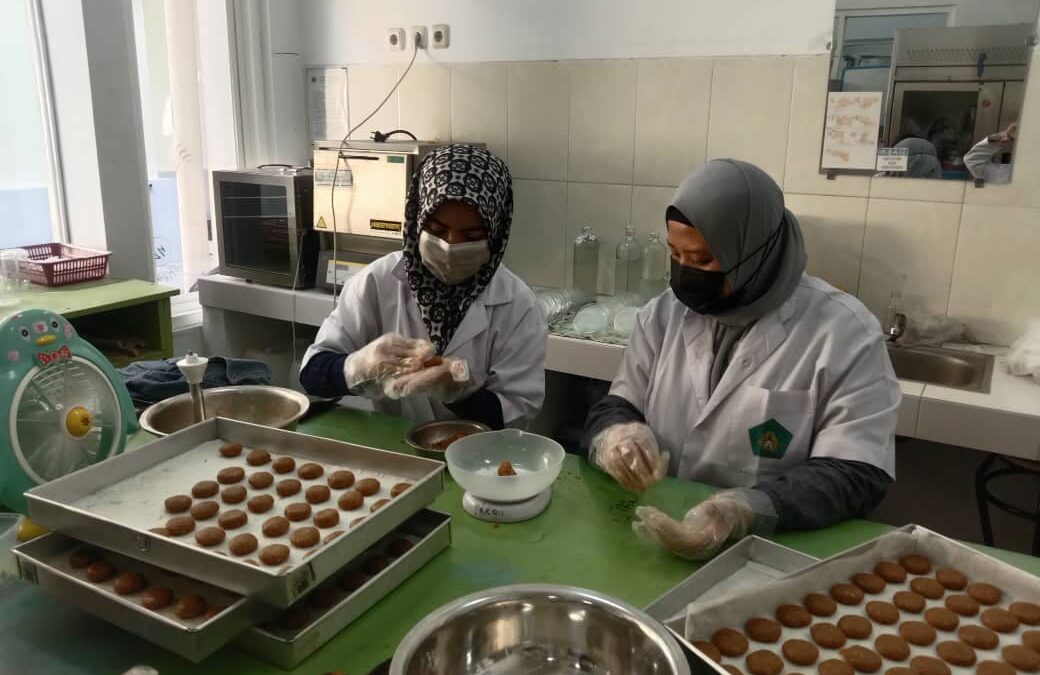
MALANG, July 12, 2024 — Wan Nor Dalila and Hawa Dalily, students from Universiti Malaysia Terengganu, have completed their student mobility program at Biotechnology Study Program of FMIPA Universiti Negeri Malang (UM), which took place from May 12 to June 14, 2024. Their research project, “Characterization of Commercial Himedia Papain Enzyme,” directly supports sustainable development goals (SDGs) 4 and 17.
SDG 4 aims to ensure quality education for all, while SDG 17 promotes partnerships for the goals. Dalila and Hawa’s investigation into the Himedia Papain Enzyme contributes to SDG 4 by enhancing knowledge and skills in biotechnology, crucial for sustainable development. Their collaboration with Biotechnology Study Program of FMIPA UM exemplifies SDG 17, fostering international partnerships to achieve common goals.
Throughout their program, the students worked closely with experts at Universitas Negeri Malang, utilizing advanced facilities to analyze and characterize the Himedia Papain Enzyme. Their findings are anticipated to improve the enzyme’s application in biotechnological processes, aligning with global efforts towards sustainable practices.
by Admin02 | Jul 16, 2024 | Berita Fakultas, SDGs, SDGs 03, SDGs 07, SDGs 08, SDGs 15
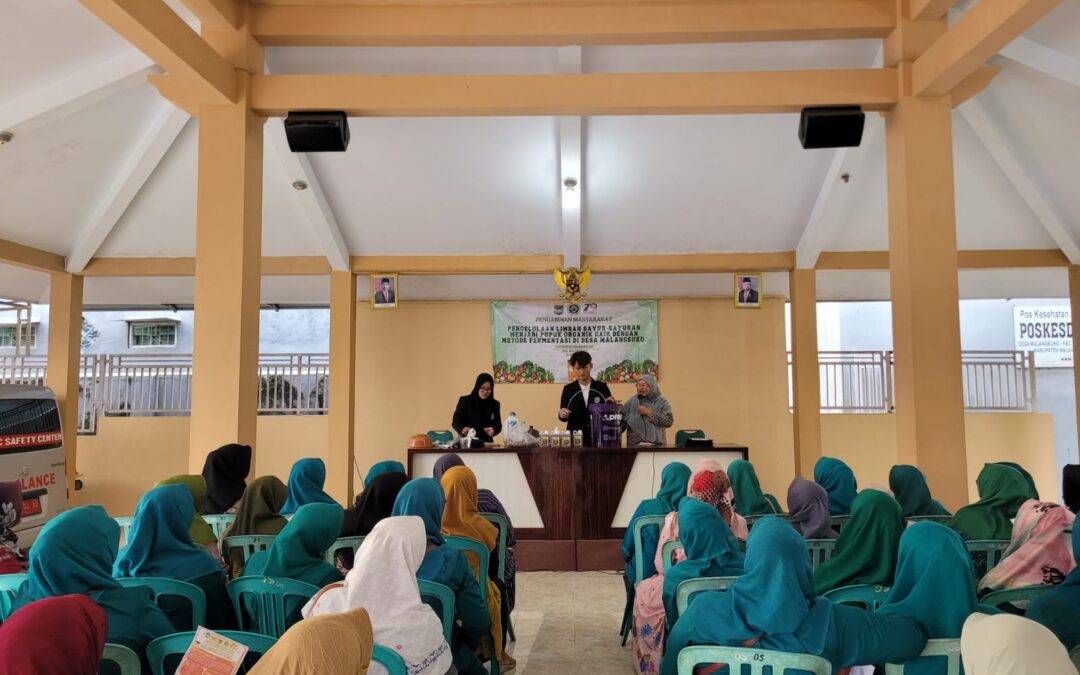
The Community Service Team of Universitas Negeri Malang (UM), comprising lecturers and students from the Biotechnology Study Program, held a training session on making liquid organic fertilizer from vegetable waste in Malangsuko Village, Malang Regency. The event, conducted at the Malangsuko Village office on Wednesday (10/7), was attended by Family Welfare Empowerment women from the village and aimed to support SDGs 3, 7, 8, and 15.
Mrs. Yetti Sholeh, head of the Family Welfare Empowerment of Malangsuko Village, expressed her gratitude for the training, noting it was the first initiative to utilize household vegetable waste. Led by Ratna Juwita, Ph.D., the team introduced the innovation of converting vegetable waste into liquid organic fertilizer for environmentally friendly agriculture.
The training supports land restoration and biodiversity (SDG 15) while offering entrepreneurial ideas. The women of Malangsuko Village engaged enthusiastically. Each participant received a tutorial, fermenters, and fertilizer samples. Ratna hopes the training will inspire MSME products in the village, boosting the local economy (SDG 8). She also noted interest in further training using other village resources.
by Admin02 | Jul 9, 2024 | SDGs 13, SDGs 15
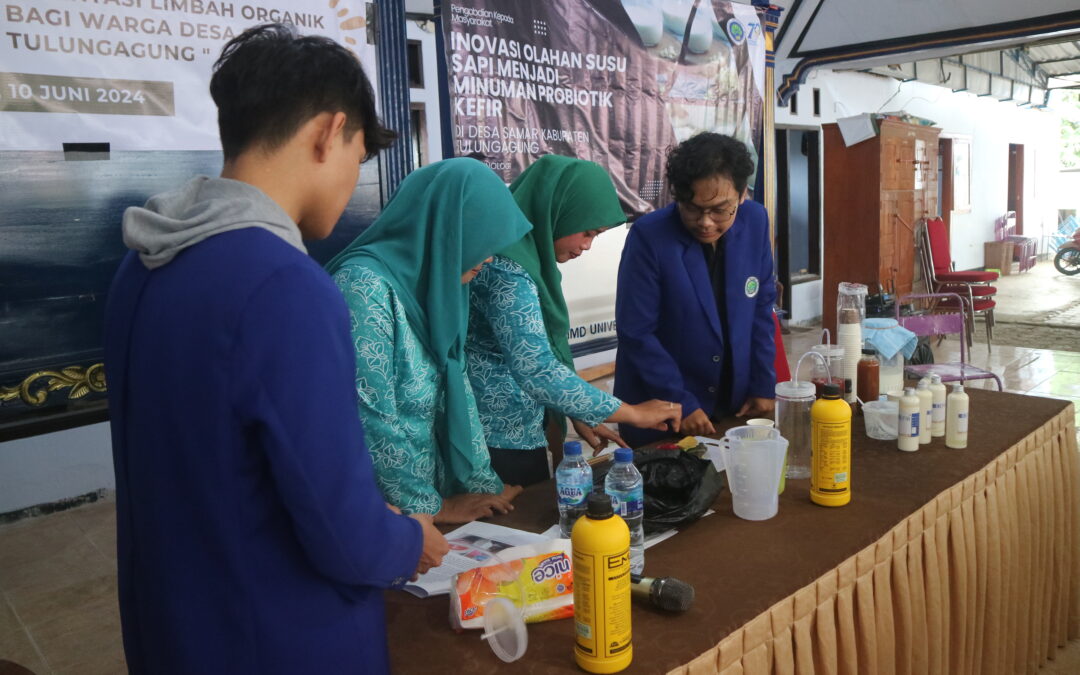
Community service is the implementation of knowledge aimed at addressing societal issues. Universitas Negeri Malang is committed to engaging in these community service activities as part of the Tri Dharma of Higher Education. One of the initiatives has been undertaken by a team of lecturers and students from the Biotechnology Study Program of FMIPA UM in the village of Samar, Tulungagung Regency, where the main training event took place on Monday, June 10, 2024.
As a fostered village of UM, the women of the Samar village PKK group mentioned that, until now, fruit and vegetable waste from daily cooking activities has just been discarded. The Biotechnology Program team from UM saw an opportunity to utilize this organic waste to produce eco-enzymes. “The fermentation technique used in the production of eco-enzymes will result in a brown, acidic liquid that can be used as a multi-purpose solution, ranging from a cleaning agent to an insecticide and even a fertilizer,” said Dr. Norman Yoshi Haryono, the head of the activity team, to the participants.
A positive response was shown by the participants during the dissemination session, where they were directly trained in the relatively easy process of making eco-enzymes. Enthusiasm was also displayed by Mr. Rubik Astono, the Head of Samar Village, who advised all participants of this community service activity, “My hope is that the women can continue making eco-enzymes at home and that this training activity doesn’t end today. Moreover, if the production of eco-enzymes can be coordinated into one of the flagship products of Samar Village,” he concluded. This community service activity, focusing on processing waste into marketable products, represents UM’s support in realizing the Sustainable Development Goals, particularly concerning climate action (point 13) and life on land (point 15).
by Admin02 | Jul 9, 2024 | SDGs 03, SDGs 07, SDGs 08, SDGs 15
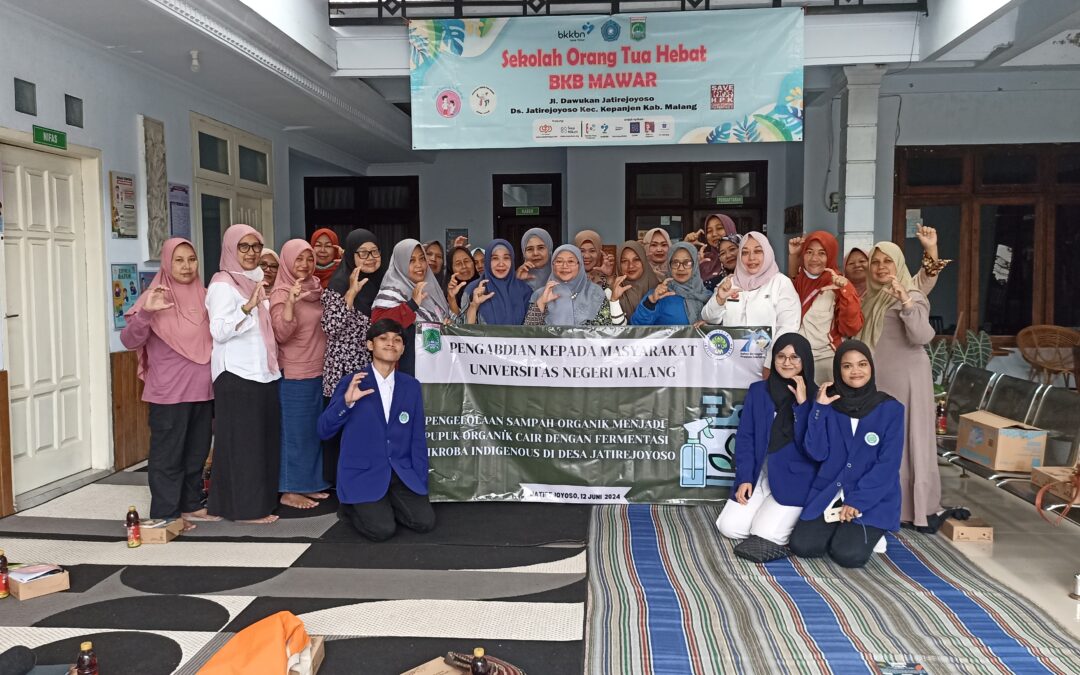
BENEFICIAL: Training Atmosphere of UM in Jatirejoyoso Village, Malang Regency
The Community Service Team of Universitas Negeri Malang (UM), consisting of lecturers and students from the Biotechnology Study Program, Department Applied Science, Faculty of Mathematics and Sciences, held a training on making organic fertilizer from agricultural waste for plant fertilizers in Jatirejoyoso Village, Malang Regency. This activity, which took place at the house of the head of the Family Welfare Empowerment of Jatirejoyoso Village last Wednesday (12/6), was attended by the women of the Family Welfare Empowerment of Jatirejoyoso Village.
Mrs. Didit, as the head of the Family Welfare Empowerment of Jatirejoyoso Village, stated that Jatirejoyoso Village is predominantly inhabited by farmers. Therefore, the training on making organic fertilizer from corn husks and straw waste is very suitable as a skill set for the residents. Until now, corn husks in Jatirejoyoso Village have been limited in use, primarily as animal feed, and have not been used as fertilizer, the same goes for straw, said the Family Welfare Empowerment chairwoman. Hence, the Community Service Team, led by Ratna Juwita Ph.D, innovated by turning corn husk and straw waste into liquid organic fertilizer for environmentally friendly agriculture.
The training activity on making organic fertilizer from agricultural waste also provided new business ideas for the Family Welfare Empowerment women. The Family Welfare Empowerment women in Jatirejoyoso Village, Malang Regency were very enthusiastic about participating in the training and mentoring, as evidenced by the numerous questions asked by the participants. Each participant received a brief tutorial on how to make the organic fertilizer. Ratna hopes that after the training ends, the Family Welfare Empowerment women can practice making organic fertilizer at home and that one day it could become a product of Micro Small and Medium Enterprises in Jatirejoyoso Village. “We provided a set of fermentor equipment and also gave the products we had produced on a small scale to the training participants,” she stated. Ratna also hopes that this training activity can improve the skills of the Family Welfare Empowerment women in Jatirejoyoso Village. “The results of the survey filled out by the participants showed a desire for more training utilizing other village potentials,” she concluded.
by Admin02 | Jul 9, 2024 | SDGs 03, SDGs 07, SDGs 08, SDGs 15
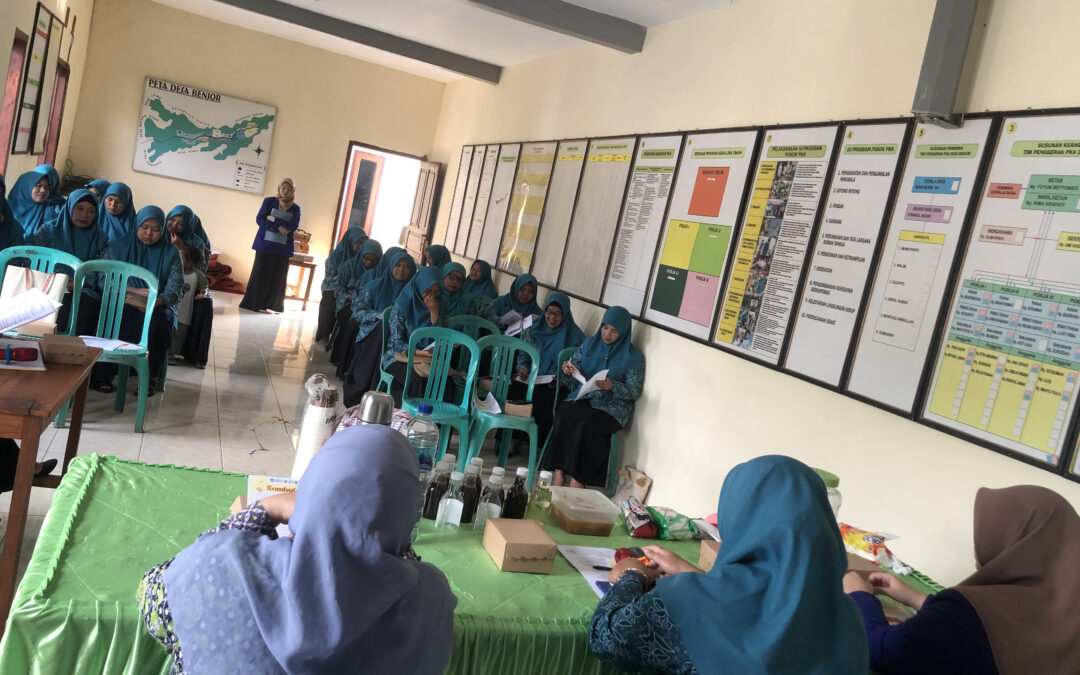
COMMUNITY SERVICE: A team of lecturers and students from Biotechnology Study Program, FMIPA UM trains Family Welfare Empowerment women in Benjor Village, how to make kombufee drinks.
After completing their service in Blitar Regency, the Community Service team of Universitas Negeri Malang moved to Malang Regency. This time, lecturers and students from the Biotechnology Study Program, Faculty of Mathematics and Sciences held training on making kombufee from coffee beans in Benjor Village, Malang Regency. This activity was held at the Benjor Village Hall, last Saturday (15/6) with participants from the Benjor Village Family Welfare Empowerment women. This activity supports SDGs 3, 7, 8, and 15.
Mrs. Yuyun, as the head of the Benjor Village Family Welfare Empowerment, said that Benjor Village is a village that produces coffee beans and sugar cane with the livelihood of its residents as farmers, so training in making kombufee made from coffee beans is very suitable. Especially to provide skills for its citizens. “Until now, the use of coffee beans in Benjor Village is still limited, on average they are only sold in the form of coffee beans and have never been used as a kombufee drink,” she said. For this reason, the Community Service team led by Ratna Juwita Ph.D innovated by making kombufee into a probiotic drink that can be enjoyed anytime and anywhere.
The training on making kombufee from coffee beans also provided new ideas for Family Welfare Empowerment women in entrepreneurship. They were also very enthusiastic about participating in the training activities. This can be seen from the various questions asked by the training participants. Each participant who attended was given a short tutorial on how to make kombufee.
Ratna hopes that after the training ends, Family Welfare Empowerment women can practice kombufee themselves at home and hope that one day it can become a product of the Micro Small and Medium Enterprises in Benjor Village. “We also provide our products which we have produced ourselves on a small scale to training participants,” she said.