0341-552180 [email protected]
CO-TEACHING BIOINFORMATICS COURSE WITH ASSOC. PROF. DR. FATIMAH BINTI HASHIM FROM BIOLOGICAL SCIENCE, UNIVERSITI MALAYSIA TERENGGANU TO SUPPORT SDGs 4 AND 17

CO-TEACHING BIOINFORMATICS COURSE WITH ASSOC. PROF. DR. FATIMAH BINTI HASHIM FROM BIOLOGICAL SCIENCE, UNIVERSITI MALAYSIA TERENGGANU TO SUPPORT SDGs 4 AND 17

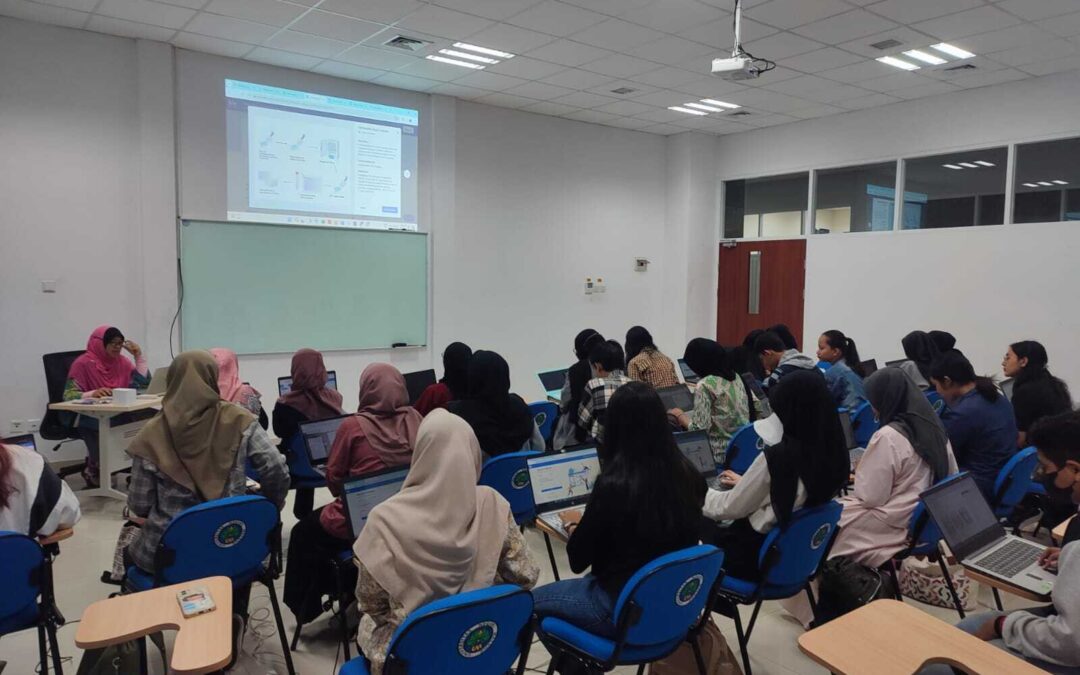
The Biotechnology Study Program of the Department of Applied Sciences, Faculty of Mathematics and Natural Sciences, State University of Malang, held a co-teaching session for the Bioinformatics course (BIOTUM6131) on June 6, 2024, with Assoc. Prof. Dr. Fatimah Binti Hashim as the guest lecturer. The event took place at Lecture Building A19, 1st floor, and was attended by biotechnology program students and those interested in bioinformatics.
This activity focuses on the use of Biorender application for creating effective visualizations of biochemical mechanisms or visualizing research methods and results. The session begins with an introduction to Biorender, covering its usage, benefits, and ease of utilizing this web-based software. After the presentation, students are encouraged to practice hands-on by creating Biorender accounts and attempting to visualize topics related to their research or understanding of biotechnology.
This co-teaching activity, through BioRender training, is expected to continually enhance students’ understanding through visualizations of micro- and nano-scale materials commonly found in biotechnology education. This activity can support the achievement of SDGs No. 4, which aims to improve quality education, and No. 17, fostering collaboration to achieve common goals. After the activity, participants took a group photo with the facilitators.
Starfruit Yoghurt Training: Transforming Star Fruit into Delicious Yoghurt for New Entrepreneurs

Starfruit Yoghurt Training: Transforming Star Fruit into Delicious Yoghurt for New Entrepreneurs

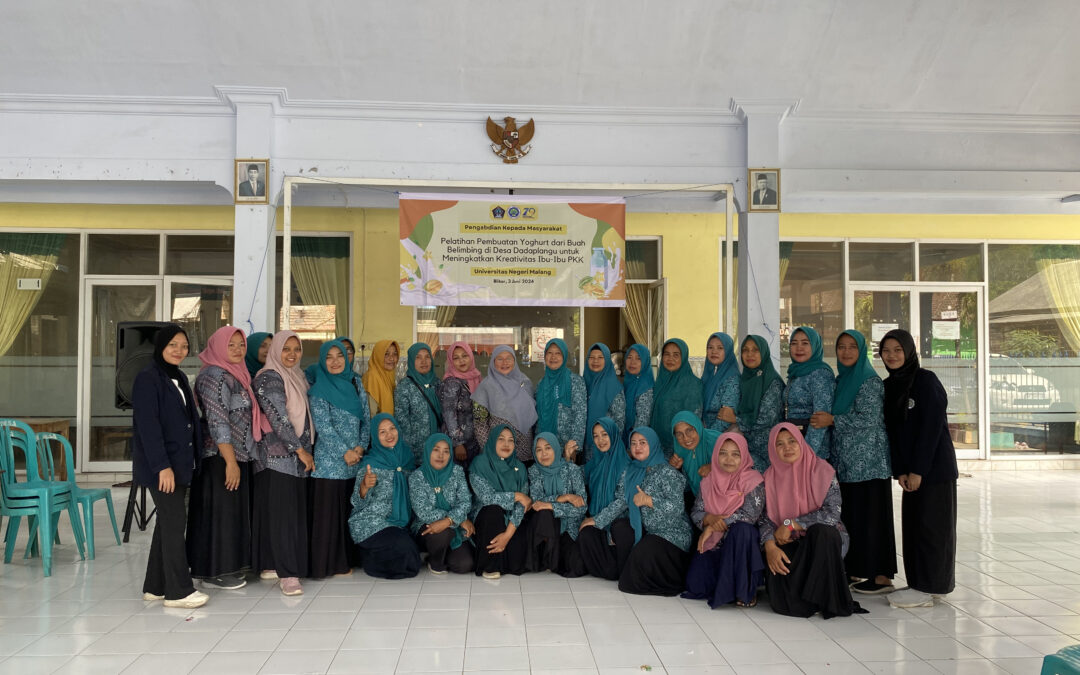
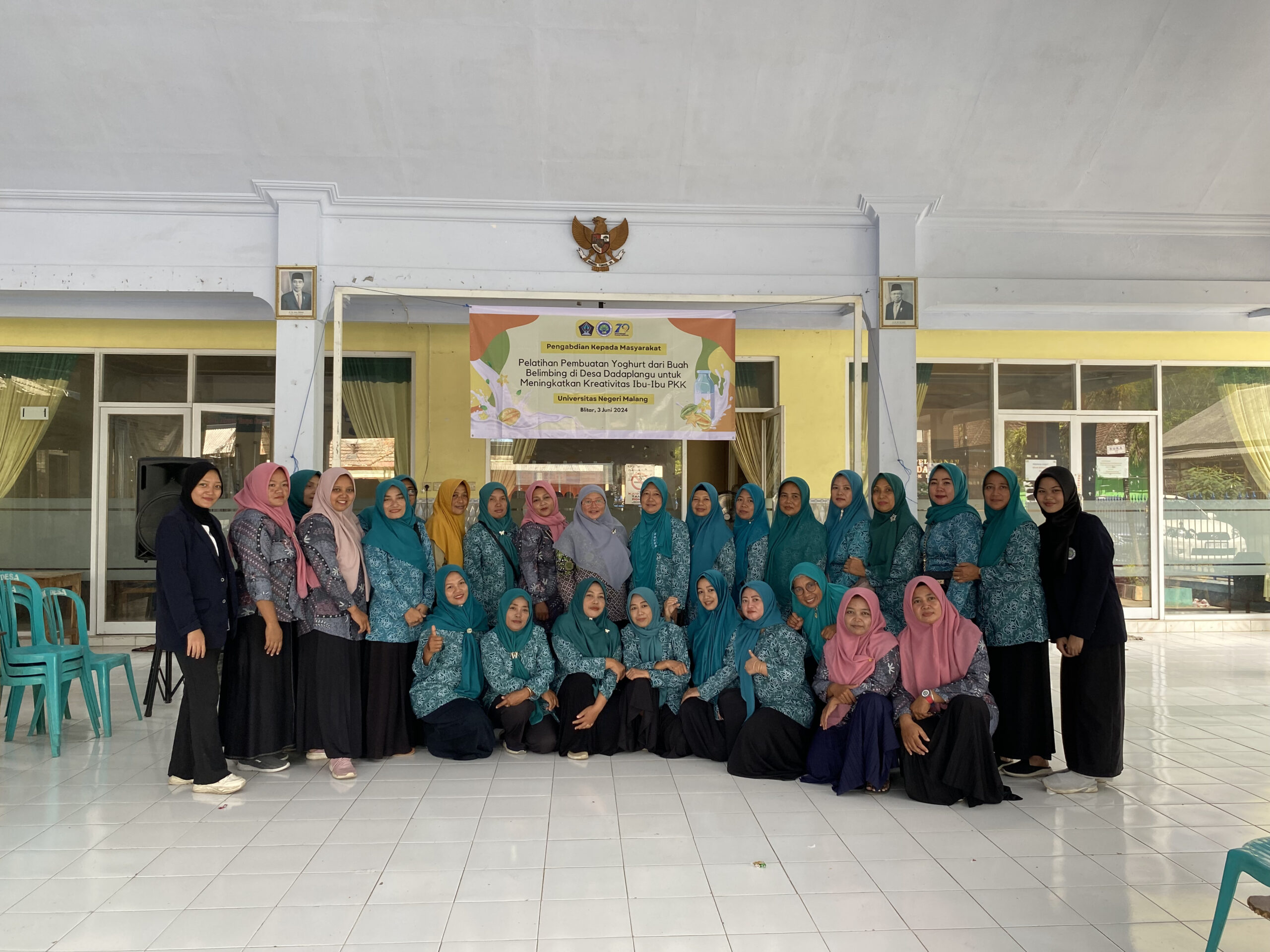
Starfruit Yoghurt Training : A team of lecturers and students from Biotechnology Study Program, FMIPA UM trains Family Welfare Empowerment women in Dadaplangu Village, how to make starfruit yoghurt.

The Community Service Team of Universitas Negeri Malang (UM), consisting of lecturers and students from the Biotechnology Study Program, Faculty of Mathematics and Sciences, held training on making yoghurt drinks from star fruit in Dadaplangu Village, Ponggok District, Blitar Regency. This activity was carried out directly at the Dadaplangu Village Office, Monday (3/6) and was attended by Family Welfare Empowerment women from Dadaplangu Village. This activity supports SDGs 3, 7, 8, and 15.

Mrs. Rokimun as the head of Family Welfare Empowerment’s Dadaplangu Village said that this training was eagerly awaited because it gave Family Welfare Empowerment women ideas for making innovative drinks from star fruit which is very abundant and easy to find in Dadaplangu Village. Until now, star fruit in Dadaplangu Village is only consumed in the form of fresh fruit, while those that are not sold or are attacked by pests are used for animal feed so that the use of terrestrial ecosystems remains sustainable, the environment remains clean and affordable (supports SDGs no. 7 and 15).

Therefore, the Community Service Team led by Ratna Juwita Ph.D innovated by making star fruit into a yoghurt drink that is liked by all groups and can be enjoyed at any time. This innovation was carried out because star fruit contains a lot of vitamin C, apart from that it also contains vitamins A, B9 (folic acid), B3 (niacin), iron, magnesium, manganese, potassium and β-carotene which are really needed by the body. “This yoghurt drink can maintain a healthy digestive system, so it is good for consumption every day, supporting SDGs no. 3”, she said.

Starfruit Yoghurt Training

supporting SDGs

This training activity on making yoghurt drinks from star fruit extract also provides new ideas for entrepreneurship, so that it can open a job opportunity and increase economic growth, especially in Dadaplangu Village (supporting SDGs no. 8). The Family Welfare Empowerment women of Dadaplangu Village, Ponggok District, Blitar Regency were very enthusiastic about participating in the training and mentoring activities as seen from the various questions asked by the training participants. Each participant who attended was given a short tutorial on how to make yoghurt drinks from star fruit.

Ratna hopes that after this training ends, Family Welfare Empowerment women can practice it themselves at home and hope that one day they can become a product of Micro Small and Medium Enterprises in Dadaplangu Village. “We also provide our products which we have produced ourselves on a small scale to all training participants,” she said. Ratna also hopes that this training activity can improve the skills of Family Welfare Empowerment women in Dadaplangu Village. “From the results of the survey that was completed by the participants, the results showed good, because they felt they had gained additional skills with new knowledge that they had never known before,” she concluded.

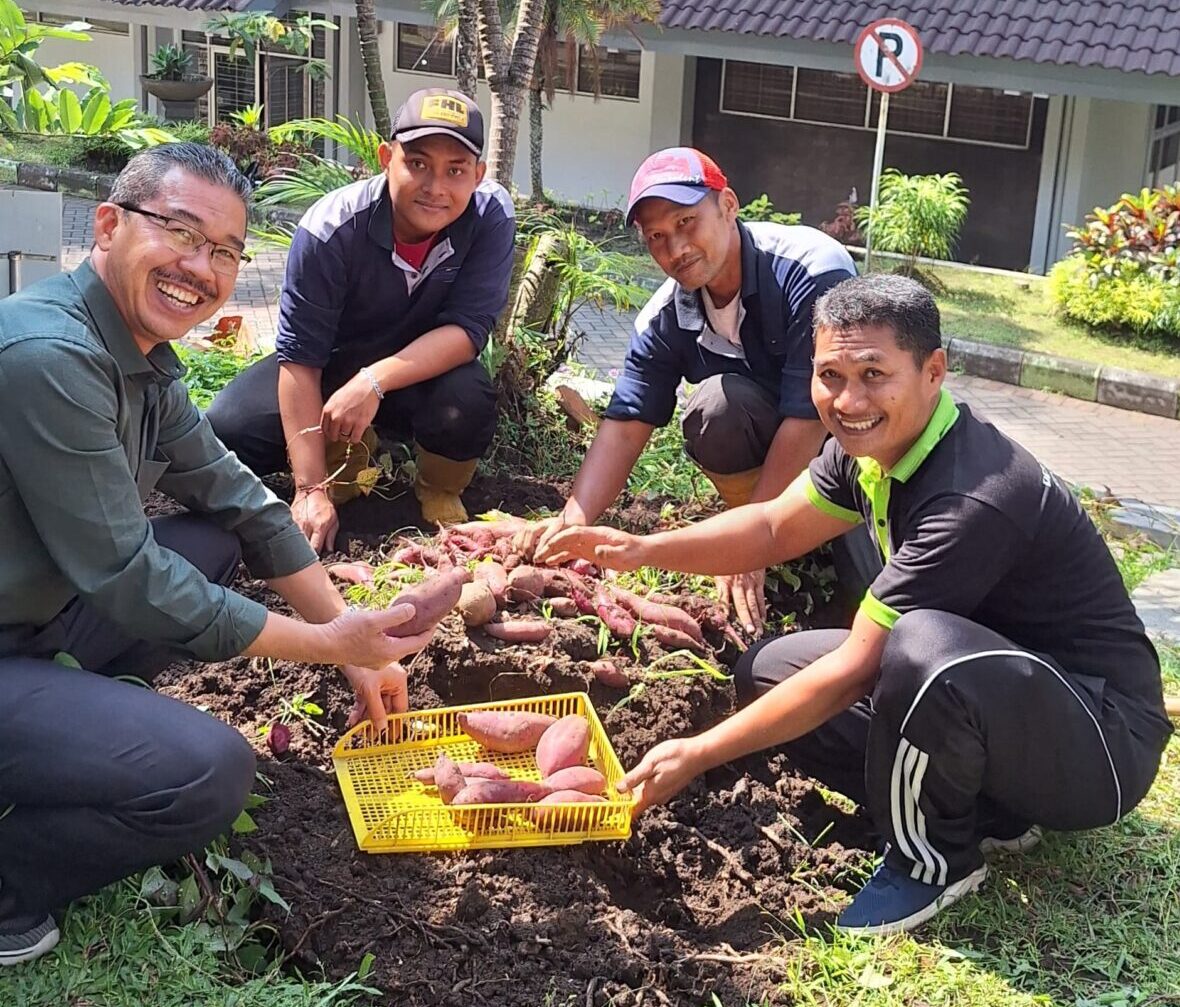
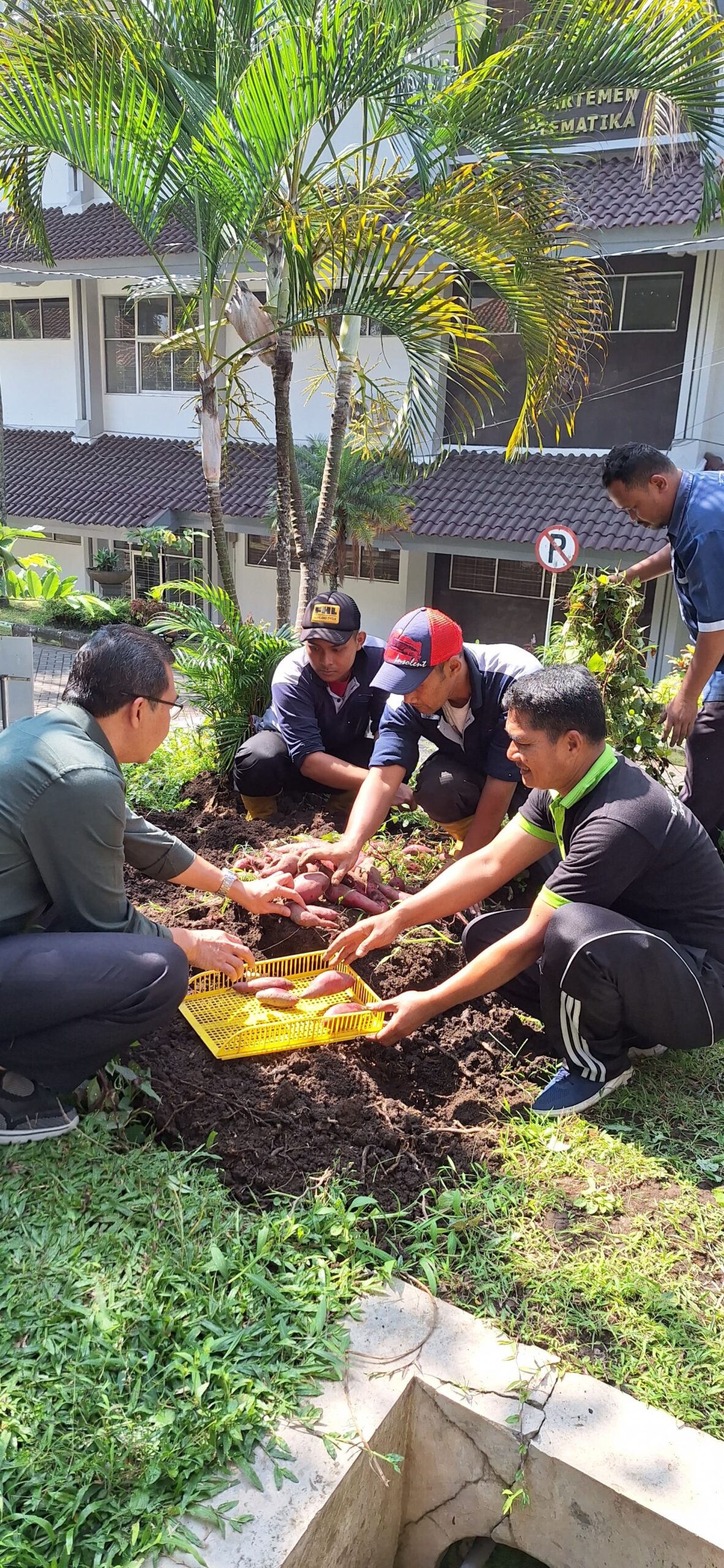
Panen Ubi Jalar di FMIPA UM

Panen Ubi Jalar di FMIPA UM

Dalam rangka meningkatkan lingkungan perguruan tinggi berkelanjutan dan mewujudkan ketahanan pangan di area kampus

Fakultas Matematika dan Ilmu Pengetahuan Alam (FMIPA) Universitas Negeri Malang (UM) melaksanakan kegiatan panen ubi jalar di FMIPA UM pada tanggal 5 Juli 2024.

Acara ini dihadiri dan dipimpin langsung oleh Dekan FMIPA, Prof. Dr. Hadi Suwono, M.Si, bersama dengan jajaran tim Green Campus FMIPA UM. Kegiatan ini merupakan salah satu langkah konkret untuk mendukung pencapaian tujuan Sustainable Development Goals (SDGs) nomor 2 (No Hunger) dan nomor 15 (Life on Land), serta memberikan dampak positif terhadap ekosistem lingkungan sekitar.

Selain Dekan FMIPA dan tim Green Campus, kegiatan ini juga melibatkan berbagai elemen di dalam kampus, termasuk mahasiswa, dosen, dan staf non-akademik. Para peserta tidak hanya turut serta dalam proses panen, tetapi juga diberikan kesempatan untuk belajar mengenai teknik budidaya ubi jalar yang berkelanjutan. Dalam kesempatan ini, Prof. Dr. Hadi Suwono menyampaikan pentingnya kontribusi semua pihak dalam menjaga keseimbangan lingkungan dan mendukung ketahanan pangan. Menurutnya, kegiatan semacam ini tidak hanya meningkatkan kualitas lingkungan kampus, tetapi juga memberikan edukasi praktis kepada mahasiswa tentang pentingnya praktik pertanian berkelanjutan.

Selain panen ubi jalar, FMIPA UM juga merencanakan berbagai program pertanian perkotaan lainnya yang melibatkan partisipasi aktif dari mahasiswa dan staf akademik. Program-program ini dirancang tidak hanya untuk meningkatkan ketahanan pangan di lingkungan kampus, tetapi juga untuk mengedukasi komunitas kampus tentang pentingnya pelestarian lingkungan melalui praktik-praktik pertanian yang ramah lingkungan. Salah satu program yang sedang dikembangkan adalah penanaman sayuran organik di area kampus, yang diharapkan dapat menjadi sumber pangan sehat bagi seluruh warga kampus.

Inisiatif ini juga sejalan dengan visi dan misi Universitas Negeri Malang untuk menjadi institusi pendidikan yang peduli terhadap lingkungan dan berkomitmen pada keberlanjutan. Dengan adanya program Green Campus, universitas berharap dapat menjadi teladan bagi institusi pendidikan lainnya dalam upaya menjaga keseimbangan ekosistem dan mendukung tujuan pembangunan berkelanjutan. Kegiatan-kegiatan ini menunjukkan komitmen universitas dalam menciptakan lingkungan belajar yang hijau, sehat, dan berkelanjutan.

Untuk memastikan keberlanjutan program ini, FMIPA UM berencana untuk mengadakan kegiatan serupa secara berkala dan melibatkan lebih banyak partisipasi dari seluruh elemen kampus. Selain itu, universitas juga akan bekerja sama dengan berbagai pihak eksternal, termasuk pemerintah daerah, komunitas lokal, dan lembaga swadaya masyarakat, untuk mendukung dan memperluas program pertanian berkelanjutan ini. Harapannya, kegiatan-kegiatan ini dapat memberikan kontribusi nyata dalam mencapai tujuan SDGs dan menciptakan lingkungan yang lebih baik bagi generasi mendatang.

Secara keseluruhan, panen ubi jalar di FMIPA UM pada 5 Juli 2024 bukan hanya sekedar kegiatan seremonial, tetapi merupakan bagian dari upaya berkelanjutan untuk mewujudkan ketahanan pangan dan lingkungan yang lebih baik di area kampus. Melalui kolaborasi dan komitmen yang kuat, Universitas Negeri Malang berupaya untuk terus berinovasi dan menjadi pionir dalam gerakan kampus berkelanjutan di Indonesia.


Chat